How to Use a Planner for Beginners: A Simple Guide to Getting Organized Without the Overwhelm
So, you’ve bought a planner — or maybe you’re eyeing one online, wondering if it’ll finally help you get your life together. Whether it’s a sleek digital planner or a beautifully bound paper one, the question remains: How do you actually use a planner as a beginner?
If you’ve ever felt overwhelmed by blank pages, forgotten to check your planner after day three, or abandoned it mid-month, you’re not alone. The good news? Using a planner doesn’t have to be complicated — and it can genuinely transform how you manage your time, reduce stress, and stay on top of your goals.
Let’s break it down step by step.
🧠 Why Use a Planner in the First Place?
Before diving into how, let’s talk about why planners are so powerful — especially for beginners:
- Reduces mental clutter by giving your thoughts a home
- Improves time management by helping you visualize your day/week/month
- Boosts productivity by keeping you focused on priorities
- Supports goal setting and habit tracking
- Encourages mindfulness through reflection and intention-setting
Whether you’re a student, entrepreneur, parent, or just someone trying to stay afloat — a planner can be your anchor.
🗂️ Step-by-Step: How to Start Using a Planner as a Beginner
1. Choose the Right Planner for You
There’s no one-size-fits-all. Ask yourself:
- Do you prefer digital or paper?
- Do you want a daily, weekly, or monthly layout?
- Do you need space for goals, habits, or journaling?
Start simple. A minimalist layout with room for to-dos and appointments is perfect for beginners.
2. Set a Planning Routine
Consistency is key. Choose a time each day or week to check in with your planner:
- Morning: Set intentions and plan your day
- Evening: Reflect and prep for tomorrow
- Sunday: Weekly overview and goal setting
Make it a ritual — light a candle, sip coffee, and make it enjoyable.
3. Start with a Brain Dump
Feeling overwhelmed? Do a brain dump. Write down everything on your mind — tasks, errands, ideas, worries. Then:
- Categorize them (work, personal, errands, etc.)
- Prioritize what needs to happen today, this week, or later
This clears your head and gives you a starting point.
4. Use the “Top 3” Rule
Each day, pick your Top 3 priorities. These are the must-dos — everything else is a bonus. This keeps your day focused and manageable.
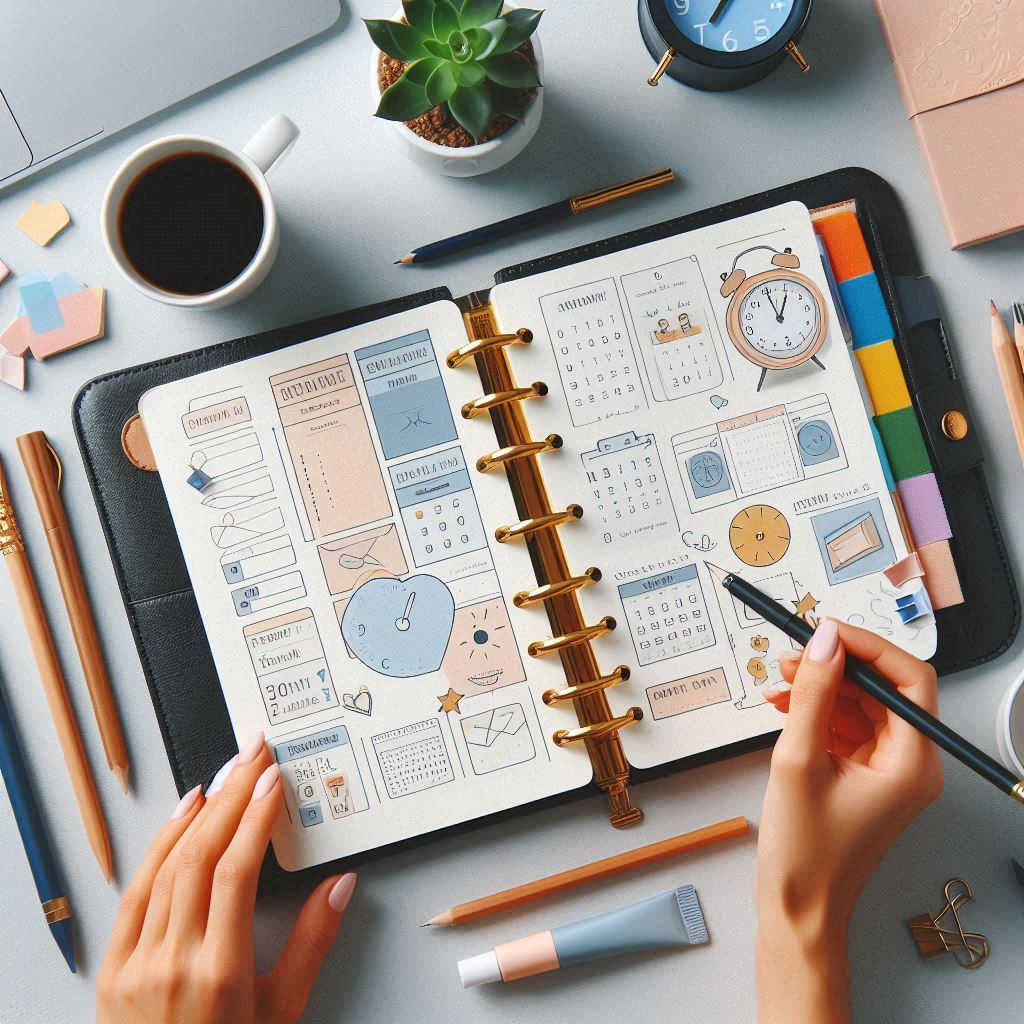
5. Color Code or Use Symbols
Visual learners, rejoice! Use:
- Colors for categories (e.g., blue = work, green = self-care)
- Icons or stickers for tasks, events, or moods
- Checklists for that sweet dopamine hit when you tick things off ✅
6. Track Habits & Goals
Most planners include habit trackers — use them! Start with 1–3 habits (e.g., drink water, stretch, journal). Seeing progress builds momentum.
Set monthly or weekly goals and break them into small steps. Your planner becomes your accountability partner.
7. Reflect & Adjust
At the end of each week or month, reflect:
- What worked?
- What didn’t?
- What can you improve?
This helps you build a system that evolves with you.
🧩 Beginner Planner Ideas to Try
- Meal planning: Save time and reduce decision fatigue
- Budget tracking: Stay on top of spending
- Gratitude journaling: Boost mental wellness
- Project planning: Break big goals into bite-sized tasks
- Mood tracking: Spot emotional patterns
🛠️ Common Beginner Mistakes (and How to Avoid Them)
| Mistake | Fix |
|---|---|
| Trying to plan everything perfectly | Focus on progress, not perfection |
| Overloading your to-do list | Stick to 3–5 tasks per day |
| Forgetting to check your planner | Set reminders or keep it visible |
| Giving up after missing a few days | Just pick up where you left off — no guilt |
| Using a layout that doesn’t fit your life | Try different formats until one clicks |
💬 What New Planner Users Are Saying
> “I used to think planners were just for super-organized people. Now I realize they’re for anyone who wants to feel less scattered.” > — Amina, 31
> “Starting small was the key. I just wrote down 3 things a day. Now I can’t imagine life without it.” > — Carlos, 24
🌈 Final Thoughts: Your Planner, Your Way
There’s no “right” way to use a planner — only the way that works for you. Start small. Be flexible. Make it fun. And most importantly, give yourself grace. Your planner isn’t just a tool — it’s a space to dream, reflect, and grow.